
Expert fertility and reproductive care guided by clarity, compassion, and evidence-based medicine. Dr. Keerthana Ravipati helps couples and individuals navigate fertility challenges, reproductive health concerns, and treatment decisions with personalised care tailored to their unique goals and circumstances.
Dr. Keerthana Ravipati is a Consultant Reproductive Medicine Specialist with advanced training in fertility, reproductive endocrinology, and women’s health. A Gold Medallist in Obstetrics and Gynaecology from Guntur Medical College, she completed her Fellowship (FNB) in Reproductive Medicine at Bangalore Assisted Conception Centre (BACC), one of India’s leading fertility training institutions.
At Spashta Healthcare, Dr. Keerthana supports couples and women through every stage of their reproductive journey—from fertility assessment and conception planning to advanced fertility treatments and high-risk pregnancy care. She believes that successful fertility care begins with understanding the individual, not simply recommending a procedure. Her approach combines evidence-based medicine, clear communication, and personalised treatment plans tailored to each patient’s circumstances and goals.
Her areas of expertise include IVF, IUI, recurrent implantation failure, recurrent pregnancy loss, PCOS-related fertility challenges, endometriosis, fertility preservation, genetic evaluation in unexplained infertility, and complex reproductive surgery. She is also trained in advanced 2D and 3D ultrasonography, enabling comprehensive fertility and reproductive assessments under one roof.
In addition to her consultations at Spashta Healthcare, Dr. Keerthana is available by prior appointment at Milann Fertility Centre. Patients value her thoughtful approach, attention to detail, and commitment to helping them make informed decisions with confidence and clarity throughout their fertility journey.
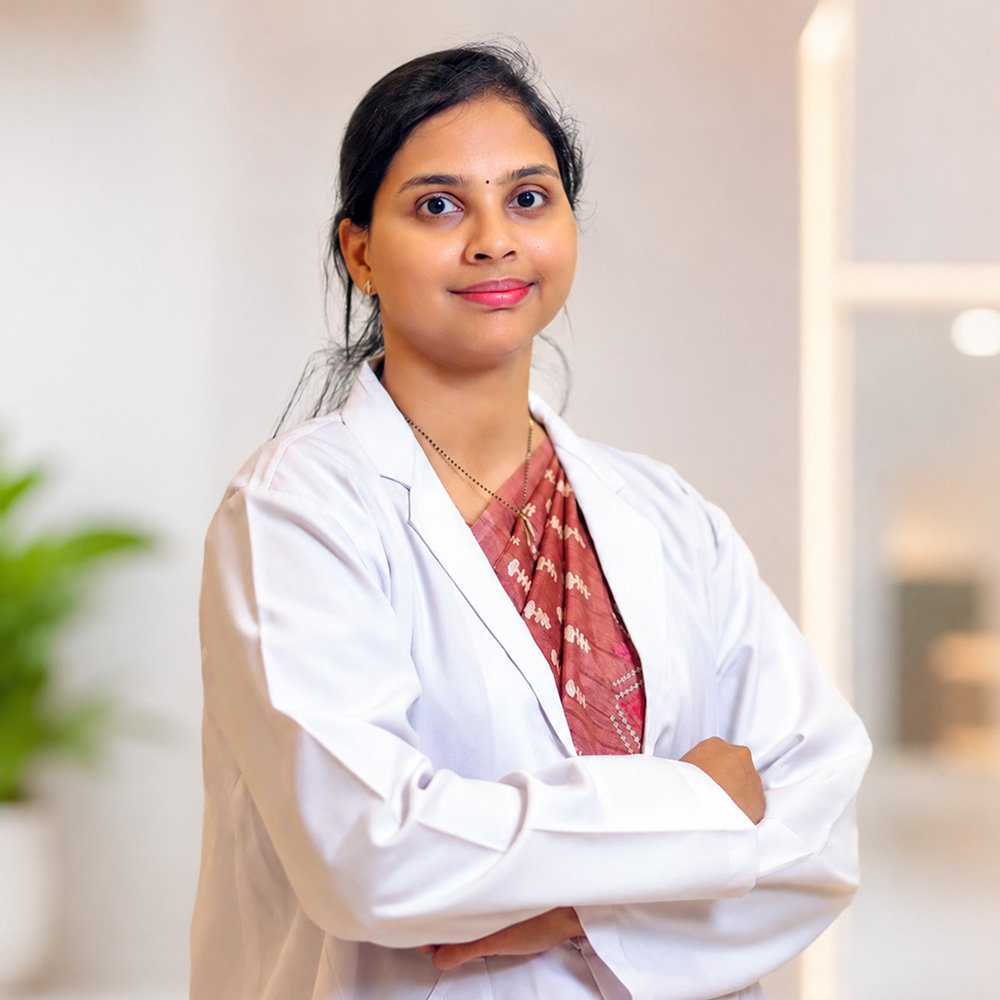
MS (OBG), FNB Reproductive Medicine Consultant Fertility & Women’s Health Specialist
Guntur Medical College — Gold Medalist
Bangalore Assisted Conception Centre (BACC)
NRI Medical College
IVF | IUI | ART in Challenging Cases | Genetic Profiling in Unexplained Infertility | Reproductive Surgery | High-Risk Obstetrics
2D and 3D Ultrasonography
Milann Fertility Centre, Bengaluru
Many couples visit a fertility specialist believing IVF is the only path to parenthood. In reality, fertility challenges are highly individual, and the right solution depends on understanding the underlying cause before recommending treatment.
Dr. Keerthana Ravipati follows a careful, evidence-based approach that begins with a thorough evaluation of both partners. In many cases, simple interventions such as cycle tracking, ovulation support, lifestyle modifications, hormonal management, or targeted treatment of an underlying condition may be all that is needed to improve the chances of conception.
When advanced fertility treatments such as IUI or IVF are appropriate, they are recommended with complete transparency and personalised planning. Every treatment decision is based on clinical need, not routine protocol. The goal is always the same: to help each couple achieve the best possible outcome through the most appropriate, effective, and evidence-based path available.
Not every couple needs IVF. Before any advanced fertility treatment is recommended, Dr. Keerthana focuses on understanding the underlying cause and determining the most appropriate path forward. For some couples, the answer is simpler than expected. For others, it is IUI or IVF delivered with full clinical rigour. The difference is in the diagnosis, not the default.
A cancer diagnosis can affect many aspects of a person’s future, including the ability to have children. Chemotherapy, radiation therapy, and certain cancer surgeries may impact fertility, sometimes permanently. Today, however, fertility preservation can often be planned before treatment begins, allowing patients to protect future reproductive options while receiving the cancer care they need.
Dr. Keerthana works closely with oncology teams to ensure fertility discussions happen early, when the widest range of preservation options is still available. Her approach combines reproductive medicine expertise with long-term planning, helping patients make informed decisions before, during, and after cancer treatment.
The period between a cancer diagnosis and the start of treatment is often the most important window for fertility preservation. Dr. Keerthana evaluates each patient's age, diagnosis, treatment timeline, and future family goals to determine the most appropriate fertility preservation strategy before cancer therapy begins.
Egg freezing and embryo freezing are among the most established fertility preservation options available today. These techniques allow reproductive cells to be preserved before chemotherapy, radiation, or surgery, helping patients maintain the possibility of future parenthood when treatment is complete and they are ready to start a family.
After cancer treatment, fertility potential may vary depending on the therapies received and the individual's reproductive health. Dr. Keerthana provides post-treatment fertility evaluation, including ovarian reserve assessment, reproductive hormone testing, and personalised fertility planning to help patients understand their options moving forward.
Successful onco-fertility care requires close collaboration between multiple specialists. Dr. Keerthana works alongside oncologists and other treating doctors to ensure fertility preservation and reproductive planning are considered from the beginning of the cancer journey rather than as an afterthought.
Infertility is not exclusively a female condition, a male condition, or even always a medical condition. It is often a couple’s condition and deserves to be approached that way. Dr. Keerthana’s infertility evaluations are designed to assess both partners, identify contributing factors, and build a treatment plan based on the specific findings rather than assumptions.
Infertility can arise from many different factors, and more than one cause may be present within the same couple. Hormonal imbalances, ovulation disorders, tubal disease, endometriosis, fibroids, age-related changes in egg quality, male factor infertility, structural abnormalities, and unexplained infertility are all regularly encountered in clinical practice. Lifestyle factors such as weight, sleep, stress, smoking, and alcohol consumption can also significantly influence fertility outcomes.
A comprehensive female fertility evaluation begins with understanding the menstrual cycle, reproductive history, and overall health. Dr. Keerthana's assessment may include hormonal profiling, ovarian reserve testing, ovulation assessment, and evaluation of the uterus, fallopian tubes, and ovaries using advanced imaging techniques, including 2D and 3D ultrasonography. Where necessary, further investigations such as hysteroscopy or laparoscopy may be recommended.
Male factor infertility contributes to a significant proportion of fertility challenges but is often under-evaluated. Dr. Keerthana ensures that male fertility assessment forms an integral part of the diagnostic process. Evaluation may include semen analysis, hormonal assessment, lifestyle review, and referral for specialised urological evaluation when indicated. Identifying male factor causes early often leads to more targeted and effective treatment planning.
Fertility challenges can place considerable emotional strain on both partners. Dr. Keerthana encourages joint consultations whenever possible, ensuring that both individuals understand the findings, treatment options, and next steps. Her approach combines medical evaluation with clear communication, helping couples navigate what can often be a complex and emotionally demanding journey together.
PCOS and endometriosis are among the most common conditions affecting women’s health and fertility, yet they are also among the most frequently misunderstood. Both conditions can influence reproductive health, menstrual cycles, hormone balance, and quality of life, often for years before a diagnosis is made. Dr. Keerthana takes a comprehensive approach that focuses not only on fertility outcomes but also on long-term health and wellbeing.
Polycystic Ovary Syndrome (PCOS) is a hormonal and metabolic condition that can affect ovulation, menstrual cycles, weight, skin, hair, mood, and fertility. While PCOS is a common cause of difficulty conceiving, many women with PCOS achieve pregnancy naturally or with relatively simple interventions. Dr. Keerthana develops personalised treatment plans that address the hormonal, metabolic, and reproductive aspects of PCOS rather than relying on a one-size-fits-all approach.
Endometriosis occurs when tissue similar to the uterine lining grows outside the uterus, causing inflammation, pelvic pain, painful periods, and, in some cases, fertility difficulties. Many women live with symptoms for years before receiving an accurate diagnosis. Dr. Keerthana uses detailed clinical assessment and advanced imaging to evaluate suspected endometriosis and develops treatment plans tailored to symptom severity, fertility goals, and overall reproductive health.
When surgical intervention is needed for conditions such as endometriosis, fibroids, ovarian cysts, or tubal disease, Dr. Keerthana offers minimally invasive laparoscopic procedures designed to minimise recovery time while preserving reproductive function. The goal of reproductive surgery is not simply to perform an operation, but to improve fertility outcomes and support long-term reproductive health.
Assisted reproductive treatments have helped millions of couples achieve pregnancy, but they are not the starting point for every fertility journey. The decision to pursue IUI, IVF, or another treatment depends on the underlying cause of infertility, previous treatment history, age, reproductive goals, and overall clinical context. Dr. Keerthana believes that the right treatment is not necessarily the most advanced one — it is the one most likely to achieve the best outcome for the individual couple.
Intrauterine Insemination (IUI) is a relatively simple fertility treatment in which specially prepared sperm is placed directly into the uterus around the time of ovulation. It may be appropriate for selected couples with mild male factor infertility, unexplained infertility, ovulation-related issues, or certain cervical factors. Dr. Keerthana carefully evaluates whether IUI is likely to be beneficial and guides patients through the process with realistic expectations and close cycle monitoring.
In Vitro Fertilisation (IVF) is the most advanced form of assisted reproductive technology available today. The process involves stimulating the ovaries to produce multiple eggs, retrieving those eggs, fertilising them in the laboratory, and transferring the resulting embryo into the uterus. IVF can be particularly beneficial for couples with blocked fallopian tubes, severe male factor infertility, advanced maternal age, certain genetic conditions, or failed IUI cycles.
Dr. Keerthana’s IVF practice is built on personalised treatment protocols. Each treatment plan is tailored to the woman’s hormonal profile, ovarian reserve, age, and medical history. Every step of the process is explained clearly, success rates are discussed honestly, and emotional support remains an integral part of care throughout the fertility journey.
Some fertility journeys require more specialised investigation and treatment planning. When standard evaluations do not provide answers, or when previous fertility treatments have not achieved the desired outcome, a deeper level of assessment may be needed. Dr. Keerthana has particular expertise in managing complex fertility challenges, combining advanced diagnostics with personalised treatment strategies designed around each couple’s unique circumstances.
For couples who have undergone multiple IVF cycles without a successful pregnancy, the question becomes not just what to try next, but why implantation continues to fail. Recurrent implantation failure is one of the most complex challenges in reproductive medicine and requires specialised investigation rather than simply repeating the same treatment protocol. Dr. Keerthana's evaluation may include uterine assessment, endometrial receptivity testing, genetic evaluation, immune assessment, and detailed review of embryo quality to identify factors that may be affecting implantation.
The loss of a pregnancy is emotionally devastating, and repeated losses can leave couples searching for answers. Recurrent pregnancy loss may result from hormonal, anatomical, genetic, immunological, or clotting-related causes, many of which can be identified and treated. Dr. Keerthana takes a multidisciplinary approach that combines reproductive endocrinology, genetics, immunology, and detailed anatomical evaluation to help couples understand the cause and move forward with confidence.
Unexplained infertility is one of the most frustrating diagnoses a couple can receive. Standard investigations may appear normal, yet pregnancy still does not occur. For some couples, the answer lies at the genetic level. Dr. Keerthana utilises advanced genetic testing where appropriate to identify factors that conventional investigations may not detect. These insights can significantly influence treatment planning and often provide couples with something equally important as treatment itself — a clearer understanding of why conception has been difficult.
For most healthy couples under 35, conception typically happens within a year of trying regularly. If you have been trying for a year without success, a fertility evaluation is appropriate. If you are 35 or older, the threshold is shorter — around six months — because fertility declines more rapidly with age. Earlier evaluation is also reasonable if you have known conditions like PCOS, endometriosis, irregular periods, or a history of pelvic surgery. Many couples who come in worried actually conceive naturally after a simple consultation that clarifies timing and approach.
The most common causes in Indian couples include ovulation disorders (often linked to PCOS), tubal factor infertility (frequently due to prior infection), endometriosis, male factor infertility (low sperm count, motility issues, or quality problems), age-related egg quality decline, and unexplained infertility. Lifestyle contributors — weight, stress, sleep, smoking, alcohol — play a larger role than many couples realize. Often there is more than one factor at play in the same couple.
This is exactly the question Dr. Keerthana’s consultations are designed to answer honestly. For many couples, the answer is that simple adjustments — understanding the fertile window, improving timing, addressing stress, making lifestyle changes, or sometimes just better communication between partners — are enough. For others, medical intervention is genuinely needed. The only way to know which category you fall into is a proper evaluation. You will not be pushed into treatment you do not need.
Ovulation induction medications are used to stimulate the ovaries to develop and release eggs. The most commonly used are Clomiphene Citrate (Clomid), Letrozole, and in more advanced treatment cycles, injectable gonadotrophins (FSH and LH-based hormones). The choice of medication, dose, and monitoring protocol depends on your specific hormonal profile, ovarian response, and the type of treatment being planned. These medications are not something to source independently or start without proper specialist supervision — dose and monitoring are critical for both safety and effectiveness.
IUI involves preparing and processing sperm in the laboratory, then placing it directly into the uterus at the time of ovulation using a thin catheter. The procedure itself takes only a few minutes, does not require anesthesia, and causes minimal discomfort. Success rates per cycle are typically in the range of 10–20%, depending on the cause of infertility, the woman’s age, and other factors. It is generally reasonable to attempt 3 cycles of IUI before considering IVF, if IUI has been the right choice in the first place.
IVF involves several stages across approximately four to six weeks: ovarian stimulation using injectable medications for about 10–14 days, egg retrieval under light sedation, fertilization of the eggs with sperm in the laboratory, embryo development over 3–5 days, and embryo transfer into the uterus. A pregnancy test is done about two weeks after transfer. Success rates depend significantly on the woman’s age, the cause of infertility, embryo quality, and the clinical protocol used — and Dr. Keerthana will discuss realistic numbers specific to your situation.
IVF is not typically described as painful, though it is physically demanding. The injections for ovarian stimulation may cause mild bruising or bloating. Egg retrieval is done under sedation, so the procedure itself is not felt, though there may be some discomfort afterwards. Embryo transfer is usually quick and largely painless. The emotional intensity of the process is often greater than the physical discomfort.
A gynecologist is trained in general women’s health, reproductive organ conditions, and obstetrics. A reproductive medicine specialist has additional fellowship training specifically in fertility, assisted reproduction, and complex reproductive conditions. For fertility concerns beyond straightforward situations — and especially for IVF, recurrent loss, or unexplained infertility — specialist care makes a meaningful difference.
Absolutely. Fertility care requires discussing intimate details of your life, your relationship, and your body, and confidentiality is non-negotiable. Your records, your conversations, and your treatment are entirely private.
Dr. Keerthana strongly prefers to consult with both partners together, where possible. Infertility is a couple’s condition, and evaluation, explanation, and support work best when both partners are part of the conversation. If your partner cannot be present at a particular visit, that is not a barrier — but over the course of an evaluation, both partners will need to be seen.
Spashta Healthcare is a super specialty OPD clinic where Dr. Keerthana offers consultations, fertility evaluations, and treatment planning. IVF and IUI cycles themselves are conducted at Milann Fertility Centre, where Dr. Keerthana also practices, with seamless coordination between the two settings. For many patients, the majority of consultations, follow-ups, and planning conversations happen at Spashta — which is closer to home and offers unhurried, private consultation.
Spashta Healthcare is located in BTM Layout, off Bannerghatta Road — conveniently accessible from HSR Layout, Jayanagar, JP Nagar, Koramangala, Bommanahalli, Hongasandra, Bilekahalli, Hulimavu, Arekere, Sarjapur Road, and across South and Central Bengaluru.
Morning and evening appointments are available.
Every fertility consultation is unhurried, private, and designed around both partners — because that is what a fertility journey actually deserves.
WhatsApp us